





THC in the body: saliva, blood and urine – how long can it be detected?
01/20/2026 11:48:23 Informacje
THC in the body: saliva, blood and urine – how long can it be detected?
How long does THC stay in the body? This is one of the most common questions – both among people who have used cannabis occasionally and those who have used it more frequently. Below you’ll find a clear explanation of what affects THC detection time in saliva, blood and urine, why metabolism matters, and why drug tests usually detect metabolites rather than THC itself.
If you’re also interested in indoor growing (growbox, LED grow lights, substrates, feeding, drying), you’ll find links to a helpful guide series at the end of this article. You can also start right away here: Growbox.
Table of contents
- What is THC and how does it work in the body?
- How long does THC stay in the body?
- What factors affect THC detection time?
- How does the method of use affect THC detection in urine, blood and saliva?
- How does body fat affect THC metabolism and elimination?
- THC metabolites – what do tests detect and how long do they remain present?
- How to support THC elimination from the body?
- Recommended internal links: “How to increase yield” series + Growbox
What is THC and how does it work in the body?
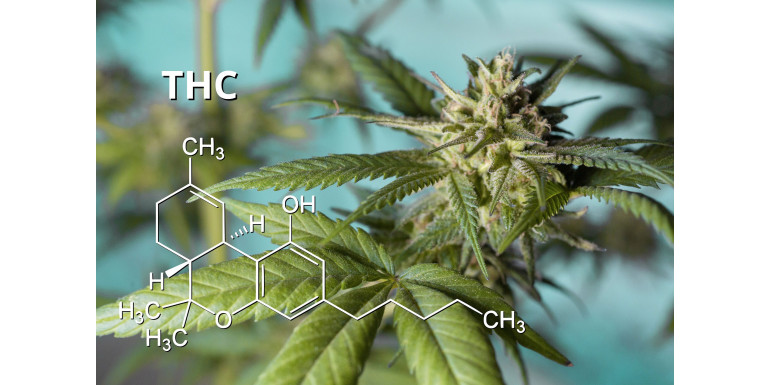
THC (tetrahydrocannabinol) is the main psychoactive compound found in cannabis. It is responsible for typical effects associated with marijuana such as euphoria, relaxation, altered perception and increased appetite.
Once in the body, THC interacts with the endocannabinoid system, binding mainly to CB1 receptors. As a result, it may affect, among others:
- short-term memory,
- motor coordination,
- perception and cognitive processes,
- pain and nausea sensations,
- appetite,
- muscle tension (sometimes used in medical contexts).
THC is metabolized mainly in the liver, where it is converted into other compounds. The most important are 11-OH-THC and THC-COOH. This matters because drug tests most often detect metabolites, which can remain in the body much longer than THC itself.
How long does THC stay in the body?
How long THC remains detectable depends on many elements: frequency of use, dose, metabolism, body fat level, physical activity and overall health.
In people who used cannabis occasionally, THC may be detectable approximately:
- in urine: 3 to 10 days,
- in blood: up to about 2 days,
- in saliva: usually up to 24 hours.
With regular use, THC and its metabolites can persist much longer – in some cases even several weeks, and depending on the person and intensity, sometimes up to around 90 days after the last use.
What factors affect THC detection time?
There’s no single “perfect” time for everyone – THC detection is highly individual. It can be influenced by:
- age,
- sex,
- body weight,
- body fat level,
- metabolic rate,
- physical activity level,
- diet and hydration,
- overall health condition.
THC can accumulate in body fat and is then released gradually into the bloodstream. That’s why people with higher body fat may eliminate THC more slowly and tests may detect metabolites for a longer time.
Regular movement and a balanced diet can support metabolism, which may help the body clear metabolites faster – although time is still the key factor.
How does the method of use affect THC detection in urine, blood and saliva?
The way THC is consumed strongly affects how quickly it appears in the body and how long it may remain detectable.
- Smoking and vaping: cause a fast rise of THC in blood and saliva. In blood, detectability is usually 1–2 days, and in saliva typically 6–24 hours (sometimes longer).
- Oral use (e.g., edibles): metabolism takes longer and the presence of THC/metabolites may be more extended over time.
- Urine tests: most often detect THC metabolites (e.g., THC-COOH), which is why a positive result may occur long after the effects have worn off.
How does body fat affect THC metabolism and elimination?
THC is a lipophilic compound, meaning it binds easily to fat. In practice, this means that after use, THC can be partially stored in body fat and released gradually.
This may:
- extend detection time,
- cause traces of metabolites to remain present even after many days,
- lead to fluctuations depending on metabolic rate.
In general: the higher the body fat level and the more frequent the use, the higher the chance that THC metabolites will remain detectable longer.
THC metabolites – what do tests detect and how long do they remain present?
The most important THC metabolites are:
- 11-OH-THC – an active metabolite that may intensify psychoactive effects,
- THC-COOH – an inactive metabolite, but the longest-detectable in tests (especially urine).
In practice:
- Urine test: most common; can detect THC metabolites up to around 30 days, and with regular use even several weeks – in extreme cases up to around 90 days.
- Blood test: usually detects THC for 1–2 days (sometimes up to 3); used e.g. in roadside checks.
- Saliva tests: most often show THC for 6–24 hours, sometimes up to 48 hours; sensitive to recent use.
Results depend on dose, method of use and individual factors, so the values are approximate.
How to support THC elimination from the body?
There is no single “magic” way to remove THC instantly. However, you can support natural metabolism and elimination by:
- hydration (reasonable water intake),
- a fiber-rich diet and light meals,
- physical activity (especially regular),
- no further intake – time is the key factor.
Keep in mind that with regular use, metabolites may remain detectable long after the effects are gone.
Recommended: “How to increase yield” series + Growbox
If you want to explore indoor growing (growbox, light, substrate, feeding, drying), start with the category that takes you step by step through the whole setup:
Also check the “How to increase yield” guide series (you can paste all parts as a complete set):
- 1) Choosing a growbox – how to increase yield (Part 1)
- 2) Which grow light to choose (Part 2)
- 3) Pots and growing media (Part 3)
- 4) Nutrients and boosters (Part 4)
- 5) Temperature, humidity, CO₂ and pH (Part 5)
- 6) Drying and curing (Part 6)
Can you “beat” a THC test? Facts and myths
The question often arises on the internet: is it possible to cheat a THC test (especially a saliva test)? It is worth approaching this sensibly, because in reality there is no single, reliable method that guarantees a "clean result" for every person.
Tests (especially rapid screening tests) can vary in sensitivity, and the result depends, among other things, on:
the time since last use,
the amount of THC and frequency of contact,
the method of consumption,
individual metabolism,
oral condition and hygiene.
The safest rule is simple: if you are risking a test, time and a break are key. Any "tricks" from the internet can be ineffective and, in many situations, can lead to unnecessary problems.
If you are looking for a product that will ensure THC is not detected in a saliva test, some people choose special sprays of this type – an example is:
Salivary Toxins Kleaner Spray 30 ml is a handy oral spray that works well in "quick" situations. It comes in a compact bottle, making it easy to take with you and use anywhere. It is a convenient solution for people who want to be sure that they have no unwanted substances in their mouth just before taking a test.